Metal 3D printing has exploded over the past few years, and it’s not hard to see why. The parts coming off these machines are genuinely impressive — and in some cases, they actually outperform what traditional manufacturing can produce.
Think about how conventional metalwork operates. You start with a block of material and cut away roughly 90 percent of it. That’s an absurd amount of waste, plus the energy cost of machining all that excess. With additive manufacturing, you only use what you need. The savings in both material and energy are dramatic.
Weight is another huge factor. 3D printed metal parts can come in up to 60 percent lighter than their traditionally made counterparts. In aviation, that translates directly into fuel savings. Real money, real impact.
This technology moves fast, too. Every time I check back in, the capabilities have jumped forward again. If you want a more affordable way to get started, our roundup of the best 3D printers under $1,000 covers machines that handle metal-infused filaments at standard printing temperatures.
The history here goes back further than most people realize. Welders were fusing metal with carbon electrode arcs in the 1880s. But the real breakthrough came when lasers entered the picture.
NASA developed selective laser melting (SLM), and their engineers proved something critical: you could produce parts with geometries and dimensional accuracy that traditional fabrication simply couldn’t touch.
The fastest method today uses a powder metal matrix bonded with binders. Each layer gets deposited, the binder holds it temporarily, and then a final oven bake fuses everything permanently. Shapeways has made this process accessible to the public, offering fast turnaround across a wide range of metals.
Quick Comparison Chart
| # | Printer | Our Rating | ||
|---|---|---|---|---|
| 1 | 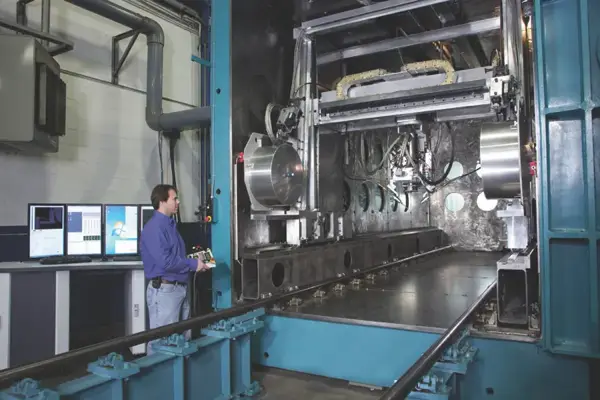 |
Sciaky EBAM 300 | ★★★★★ | Check Price |
| 2 | 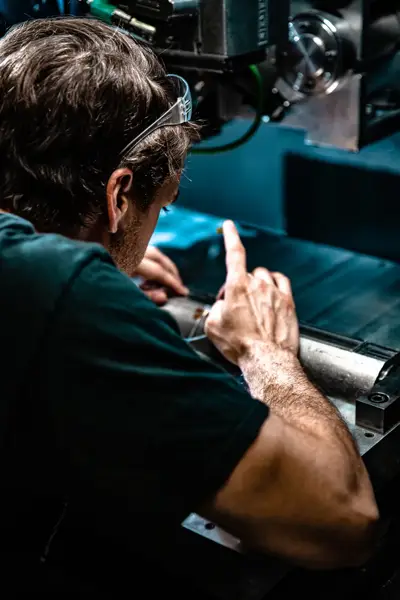 |
Fabrisonic UAM | ★★★★★ | Check Price |
| 3 |  |
Concept Laser XLine 1000 | ★★★★☆ | Check Price |
| 4 |  |
Desktop Metal Studio | ★★★★☆ | Check Price |
| 5 | 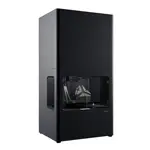 |
Markforged Metal X | ★★★★☆ | Check Price |
| 6 |  |
Shining 3D EP-M100T | ★★★★☆ | Check Price |
| 7 | 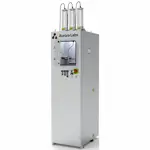 |
Aurora Labs S-Titanium Pro | ★★★★☆ | Check Price |
| 8 | 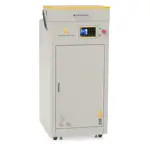 |
Xact Metal XM200 | ★★★★☆ | Check Price |
| 9 | 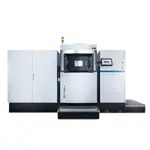 |
EOS M 400 | ★★★★☆ | Check Price |
| 10 | 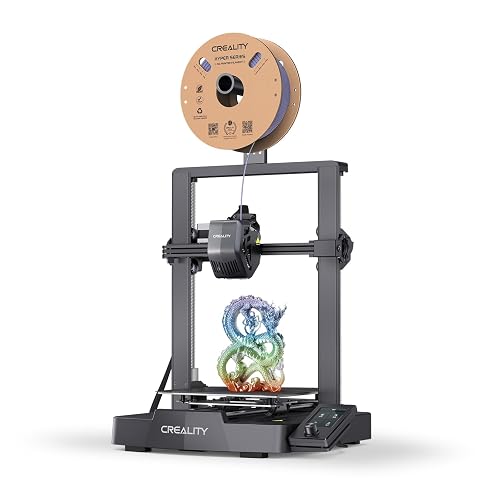 |
ALUNAR Metal 3D Printer | ★★★★☆ | Check Price |
1. Sciaky EBAM 300 — Best Overall
Sciaky EBAM 300
The largest commercially available metal 3D printing system in the world. It can create a 10-foot titanium aircraft structure at 15 pounds of metal per hour, completing in 48 hours what traditional forging takes months.
Pros
- Largest commercially available metal 3D printing system in the world
- Deposits metal at rates of 7 to 20 pounds per hour
- Creates in 48 hours what traditional forging takes 6 to 12 months
- Patented IRISS Closed-Loop Control for material composition accuracy
Cons
- Extremely expensive and only suitable for large-scale industrial use
- Requires specialized facilities and trained operators
If you need to print large metal structures, the Sciaky EBAM 300 was built for exactly that job. It’s the workhorse of the U.S. defense and aerospace sectors, and Sciaky’s largest platform boasts a build envelope of 228” x 48” x 48”.
Sciaky is one of the fastest-growing names in industrial 3D printing, and the numbers tell you why. This machine can produce a 10-foot titanium aircraft structure at fifteen pounds of metal per hour. Total time? About 48 hours.
Traditional forging for the same part? Six to twelve months. Let that sink in for a second.
Under the hood, a high-power electron beam gun melts 3 mm titanium filament at deposition rates between 7 and 20 pounds per hour. The work envelope — 19’ x 4’ x 4’ x 8’ — is among the largest on any commercial metal 3D printer in existence.
What truly separates the EBAM 300 from everything else is this: it’s the only system on the planet producing metal structures over ten feet long. It works with niobium, titanium, Inconel, tantalum, and a range of alloys.
Sciaky’s patented IRISS Closed-Loop Control Technology provides precise control over material composition and part geometry. And since additive manufacturing wastes far less raw material than subtractive methods, the savings on expensive metals are substantial.
This isn’t a prototyping tool. It’s a full-production system used by defense contractors, aerospace firms, and energy companies to build, repair, and upgrade next-generation components.
I want to be clear: this is the largest commercially active 3D printing system in the world. Not a lab curiosity. Not a proof of concept. It produces real metal parts for real industrial applications, every day.
2. Fabrisonic UAM — Runner Up
Fabrisonic UAM
Uses Ultrasonic Additive Manufacturing to create metal parts by welding metal tapes together with ultrasonic vibrations. Three-axis CNC mills provide precision finishing.
Pros
- Ultrasonic welding creates solid-state bonds without melting the metal
- Three-axis CNC mill ensures precise surface finish and tolerances
- Can embed sensors and electronics within solid metal structures
- Proven technology used by defense and aerospace contractors
Cons
- Limited build volume of 6 x 6 x 3 inches
- High cost puts it out of reach for most small businesses
Fabrisonic does something completely different. Their Ultrasonic Additive Manufacturing (UAM) technology pairs a three-axis CNC mill with an additive welding head. The build volume is modest at 6” x 6” x 3”, but what comes out of that chamber is remarkable.
The concept: metal tapes get layered and welded together using ultrasonic vibrations to build solid three-dimensional objects. Periodic CNC machining passes carve out fine details as the part takes shape.
Here’s how it works. A transducer sends vibrations through a disk-shaped welding horn, which creates an ultrasonic solid-state weld between a base plate and thin metal tape. The horn rolls continuously, bonding each tape to the one below it. Layer by layer, the object builds up in height.
Once it’s done, a final CNC contour milling pass handles surface finish and tight tolerances.
The underlying technology isn’t new — ultrasonic welding has been around since the 1960s. The vibrations create friction-like motion between two clamped surfaces, causing deformation that strips away contaminants and oxides. What’s left is clean metal-to-metal contact that forms a strong solid-state bond.
Fabrisonic works primarily with defense contractors, aerospace companies, and high-tech manufacturers. They’re growing steadily and looking to expand.
3. Concept Laser XLine 1000 — Best Industrial
Concept Laser XLine 1000
The biggest powder metal 3D printer on the market with a 630 x 400 x 500 mm build volume, a 1,000-watt laser, and the ability to build parts up to 1,000 kg.
Pros
- Largest powder metal build volume available on the market
- 1,000-watt laser core significantly increases productivity
- Works with nickel alloy, stainless steel, cobalt chrome, and titanium
- Improved surface quality with automated process monitoring
Cons
- Size comparable to a single-story house
- Requires significant capital investment and floor space
The Concept Laser XLine 1000 is the biggest powder metal 3D printer you can buy right now. A 630 x 400 x 500 mm build volume, a 1,000-watt laser, and a physical footprint roughly the size of a small house.
It produces parts up to 1,000 kg. To put that in perspective, you could print an entire V6 engine block on this thing. The productivity gains over other commercial laser melting systems are significant.
Size isn’t the only story here. Surface quality is improved, reliability is higher, and reproducibility is better thanks to built-in process monitoring that keeps every layer consistent.
Material versatility is where the XLine 1000 really shines: nickel-base alloys, stainless steel, cobalt-chromium, tool steels, precious metals like silver and gold, plus reactive materials including aluminum and titanium alloys. That range makes it relevant to automotive, aerospace, jewelry, and medical industries simultaneously.
Automotive and aerospace get the biggest wins. Lightweight aluminum alloys can replace expensive tool and die casting, producing rigid, weight-optimized structures that traditional manufacturing simply can’t create.
Machines like the XLine 1000 keep pushing the boundaries of what’s possible — massive components, fine resolution, increasing speed. That kind of capability doesn’t just improve manufacturing. It reshapes entire industries.
4. Desktop Metal Studio — Best Value
Desktop Metal Studio
One of the most affordable metal 3D printing systems. It comes with a furnace and uses Microwave Enhanced Sintering at speeds up to 16 cm3 per hour.
Pros
- Around ten times cheaper than competing metal 3D printing systems
- Prints at speeds up to 16 cm3 per hour
- Achieves densities higher than 98% comparable to wrought alloys
- Software-controlled workflow automates every stage of the process
Cons
- Still not small enough for true desktop placement
- Limited to specific metal rod materials
Want a metal 3D printer near your desk? The Desktop Metal Studio is the closest you’ll get today. It’s not truly desktop-sized, but it’s a strong addition to any workshop or office.
The system ships with its own furnace and produces ready-to-use parts through Microwave Enhanced Sintering. Speeds hit up to 16 cm3/hr, and for the price, the capabilities are hard to match.
The real headline is cost. This system runs roughly ten times cheaper than competing metal 3D printers.
Instead of selectively melting powder, it uses metal rod extruders that operate similar to a standard FDM printer. That eliminates a lot of the safety concerns around handling loose metal powders. Closed-cell infill lets you build lightweight parts without giving up structural strength.
Output quality compares favorably to Metal Injection Molding (MIM). Bulk sintering hits densities above 98%, meaning the finished parts perform on par with wrought alloys.
The entire workflow is software-controlled and automated. Their proprietary separable supports mean you just pull the finished part out by hand. No cutting, no grinding.
We’re inching closer to metal 3D printing in homes and small shops. The Desktop Studio is doing a lot of the heavy lifting to get us there. It honestly wouldn’t surprise me if a consumer version showed up within the next few years.
5. Markforged Metal X — Best for Speed
Markforged Metal X
Uses ADAM technology to create real metal parts with honeycomb internal structures. Build volume of 200 x 200 x 250 mm with 50-micron layer height.
Pros
- ADAM technology produces parts nearly indistinguishable from cast metal
- Honeycomb internal structures reduce weight while maintaining strength
- 50-micron layer height for extremely detailed metal prints
- Prints stainless steel, aluminum, tool steel, Inconel, and titanium
Cons
- Very high price point for the hardware
- Requires post-processing through sintering furnace
The Metal X was built with one clear mission: produce metal parts fast. And it delivers. Geometrical accuracy is outstanding, and the metals it supports — stainless steel, aluminum, tool steel, Inconel, titanium — cover automotive, aerospace, and defense applications.
Here’s the process: the extruder lays down powdered metal on a build plate, then a sintering furnace densifies the part into its final form. What’s clever is the system monitors shrinkage in real time and compensates automatically. No manual adjustment needed.
The core technology is called Atomic Diffusion Additive Manufacturing, or ADAM. It enables design features that traditional manufacturing can’t touch — like honeycomb internal structures that dramatically cut weight while maintaining strength.
A 200 x 200 x 250 mm build volume with 50-micron layers produces parts that are nearly indistinguishable from cast metal. The results are genuinely impressive.
Is it expensive? Very. But machines like the Metal X are pushing the entire industry forward, and that’s exciting even if most of us won’t have one in our shops for a while.
6. Shining 3D EP-M100T — Best for Small Parts
Shining 3D EP-M100T
A compact SLM printer for jewelry, dental, and educational applications. Uses a 100 to 200 watt laser with remote monitoring through smartphone.
Pros
- Compact build chamber perfect for dental, jewelry, and educational use
- 100W to 200W laser power handles a wide range of metal powders
- Remote monitoring through smartphone and remote control
- Open system allows limitless lab experimentation possibilities
Cons
- Small build chamber limits the size of printable objects
- Best suited for specialized applications rather than general use
Scaling way down, Shining 3D’s EP-M100T is designed for jewelry makers, dental labs, and educational settings. It packs a 100 to 200 watt laser that processes a range of metal powders using selective laser melting (SLM), fusing fine powder layers directly from a 3D file.
The compact build chamber is actually a strength here. In a lab where you don’t need massive throughput or a room full of supporting equipment, it fits perfectly. And the open system design means experimentation is basically unlimited.
Shining 3D kept the footprint practical — touchscreen controls, clean interface, nothing overcomplicated. You can even monitor prints and diagnose problems remotely through a phone app.
Safety protections cover both operator and machine, and the integrated design keeps maintenance straightforward. Print quality punches above its weight for a machine this compact. An intelligent powder coating system paired with fast scan speeds keeps the process efficient.
Operating costs stay low too. The compact chamber and tight sealing cut down on powder waste noticeably.
7. Aurora Labs S-Titanium Pro — Most Versatile
Aurora Labs S-Titanium Pro
Three printers in one machine with SLM, SLS, and DED modes. Features a 300W laser, on-the-fly alloying, and the widest metallic powder range in its class.
Pros
- Three printing modes in one machine: SLS, SLM, and DED
- Supports more metal materials than most competing printers
- On-the-fly alloying capability in DED mode
- More affordable than other industrial metal printers in its class
Cons
- Originated from a Kickstarter campaign with early production delays
- Some advertised materials are still in beta testing
A metal 3D printer born on Kickstarter? That’s unusual. But Aurora Labs pulled it off — kind of. After an IP dispute derailed their original project, they pivoted and started building something even more ambitious.
The S-Titanium Pro emerged from that setback with a 300W laser, broader metal compatibility than most competitors, and a relatively accessible price tag.
Third-party powders work fine as long as they meet Aurora Labs’ purity and particle size specs. The real hook is versatility: this is essentially three machines in one.
You can switch between selective laser sintering (SLS), selective laser melting (SLM), and directed energy deposition (DED). DED mode even supports on-the-fly alloying, and three independently controllable powder hoppers open up pseudo-alloying possibilities that most single-mode printers can’t touch.
Aurora Labs has been generating strong interest and ramping production. The combination of multi-mode printing, wide metal support, and a lower price point is doing a lot to push metal 3D printing toward the mainstream.
8. Xact Metal XM200 — Budget Pick
Xact Metal XM200
An affordable US-made metal 3D printer with a 250W fiber laser, argon gas chamber, and cloud connectivity for remote monitoring.
Pros
- 250W fiber laser builds layers as thin as 20 to 100 microns
- Cloud connectivity enables remote monitoring of multiple printers
- Easy access build area for convenient cleaning and quick setup
- Affordable price point from a US-based manufacturer
Cons
- Smaller build volume than competing industrial printers
- Requires specialized argon gas power system
The Xact Metal XM200 takes a different path than most machines on this list. The build chamber floods with argon gas while high-power lasers fuse metal powders layer by layer.
Build volume is on the smaller side, but the price is right and it’s made in the US. One standout detail: the beam maintains a consistently orthogonal angle across the entire powder surface, which means uniform fusing properties no matter where on the bed you’re building.
It’s a traditional laser powder bed system at its core. The laser hits the material directly, and a high-speed scanner ensures even power delivery as the powder builds up.
The compact chamber isn’t just an aesthetic choice. The argon gas system needs to purge all oxygen, and a smaller volume makes that process faster and more efficient.
Trade-off? The build volume limits what you can produce. And you’ll need a specialized argon gas system, which adds to the total investment.
9. EOS M 400 — Premium Pick
EOS M 400
A German-engineered industrial DMLS printer with a 1kW laser and 400 x 400 x 400 mm build volume. Modular platform with setup and process stations.
Pros
- 1kW laser with increased productivity for large batch production
- 400 x 400 x 400 mm build volume for large metal components
- Modular platform with setup and process stations for efficiency
- Extensive monitoring for next-level quality management
Cons
- Premium price tag beyond most small business budgets
- Requires dedicated space and trained technical staff
EOS is a German manufacturer, and they built the M 400 around their own DMLS (Direct Metal Laser Sintering) technology. Fiber lasers melt and fuse fine metal powder layer by layer into finished objects.
The geometries this process can handle would be impossible to machine conventionally. Deep slots, freeform surfaces, complex coolant ducts — things that make traditional machinists cringe.
With a 400 x 400 x 400 mm build volume, the M 400 produces large, high-quality metal parts at industrial scale. CAD data goes in, finished parts come out. No tooling required.
The modular platform is well thought out, with separate setup and process stations. The architecture is built to absorb future upgrades without ripping everything out and starting over. Monitoring capabilities are extensive, and the software cleanly separates job prep from the actual build.
For an industrial machine this capable, the day-to-day usability is surprisingly good. The touchscreen is responsive and intuitive, and EOS offers a deep materials portfolio to match virtually any application.
10. ALUNAR Metal 3D Printer — Best for Home Use
ALUNAR Metal 3D Printer
An affordable, fully assembled desktop 3D printer with auto-leveling, all-metal frames, color touch screen, and support for 1.75mm ABS and PLA filaments.
Pros
- Most affordable metal-frame 3D printer for home and hobby use
- Fully assembled with auto-leveling for quick setup
- Color touch screen makes operation easy for beginners
- Memory function lets you resume printing from a stop point
Cons
- Uses metal-infused filament rather than true metal sintering
- Smaller build volume limits project size
Now, one for the rest of us. The Alunar isn’t going to sinter titanium or fuse powder with lasers. But it’s the most accessible entry point on this entire list for anyone curious about metal-look 3D printing at home.
Customize things. Prototype ideas. Or just mess around and see what happens. That’s the beauty of having one of these on your desk.
There’s a real educational angle too. Working with a 3D printer teaches problem-solving and spatial thinking in a way that’s hard to replicate elsewhere. Print standalone objects, components for bigger projects, or articulated pieces with moving parts. Add other tools into the mix and you’ve got multi-material projects going.
The Alunar R200 is a small to mid-sized machine that punches above its weight on accuracy. Setup is quick, the software is flexible, and you don’t feel limited.
Mid-print color change? Swap the filament while it’s running. The 0.4mm extruder keeps accuracy tight.
The all-metal frame assembles without headaches, and you can skip heated bed fiddling — prints bond directly to the patented print plate. A color touchscreen keeps everything simple and leaves room for future upgrades.
It runs standard 1.75mm ABS and PLA, handles filament loading and unloading automatically, and has a memory function that lets you pick up exactly where you left off after a power loss or pause. That same feature makes multi-color prints practical — pause, swap, resume.
Out of everything on this list, the Alunar opens up the most possibilities for everyday users and hobbyists.
Buying Guide
Industrial Metal 3D Printing
Buying a metal 3D printer for your business is a massive financial commitment. Unless you’re printing metal parts every single day, it’s probably not worth it.
The printer alone runs between $100,000 and $500,000. Then add the cost of a trained operator who can also handle maintenance. It adds up fast.
For most businesses, outsourcing to a 3D printing service makes way more sense. Companies like Sculpteo and i.materialise will print your parts and ship them to your door. They work with steel, copper, aluminum, brass, sterling silver, bronze, titanium, gold, and platinum.
Goldsmiths can even order wax casting models. This service sector has been growing rapidly as commercial metal printers become more common at printing bureaus.
Larger companies are leveraging these services to build enhanced parts with optimized material distribution — engineering components that handle more stress while weighing less. If you go this route, you’ll need CAD files in the right format. Shapeways publishes specific guidelines for metal 3D printing submissions.
3D Printing Services
Shapeways is one of the most popular 3D printing services globally. You can browse professionally designed items and customize them, or upload your own models for printing. Designers can even set up a storefront to sell their work. They run industrial-grade printers from EOS and 3D Systems with dedicated technical support. Metals include aluminum, brass, bronze, gold, platinum, precious plated metals, silver, and steel. They also produce castable wax for jewelers.
Sculpteo lets you upload a 3D model and they’ll produce it from your choice of materials. You can open a storefront too. They operate EOS, 3D Systems, ZCorp, and Stratasys machines, and their documentation helps you catch design flaws before printing. Metal options include alumide (aluminum-infused plastic), brass, and silver.
i.materialise focuses on industrial clients but also works with individuals through their online portal. Upload a design, get it printed, and optionally sell it through their gallery. Metal selection covers alumide, brass, bronze, copper, gold, silver, steel, and titanium.
3D Hubs connects you with local 3D printing providers. Upload an STL file, get an instant quote, and filter by distance, material, and user ratings. Chances are solid that someone in your area can handle whatever you need.
3D Printed Metals Applications
You’re probably already using 3D printed metal without knowing it. Dental crowns and medical implants are increasingly made this way because each piece can be tailored to a specific patient. In many cases, it’s the best option available.
Jewelry manufacturers have been making the shift too — moving away from lost wax casting toward direct metal printing. Aerospace was an early adopter for obvious reasons, and automotive is closing the gap. Manufacturers aren’t just prototyping with 3D printing anymore. They’re making actual production parts.
Challenges remain. Cost is still high, and print speeds for metal can be slow.
But these aren’t unique to metal printing. They’re the same hurdles the entire 3D printing industry faces — hardware limitations, software maturity, material science. The encouraging part? Most metal parts coming off these printers already match or exceed the strength of traditionally manufactured components.
Metal 3D Printing At Home
Real metal 3D printing at home isn’t practical yet. The temperatures involved are extreme, and the equipment requirements put it out of reach for residential setups. That’ll change eventually, but we’re not there today.
What you can do right now is use metal-infused plastic filaments. These blend a high percentage of metal powder with enough PLA to print at standard temperatures. The finished objects have the weight, feel, and visual appearance of actual metal.
Formfutura, a Dutch company, makes filament with 85 percent metal powder and just 15 percent PLA. Any standard FDM printer can handle it. Some hobbyists use metal-fill filaments to create weighted custom Lego bricks — our list of the best 3D printers for Legos covers machines with the dimensional accuracy those projects require.
A few practical tips if you try this. Metal-infused filament is abrasive. It’ll chew through a standard brass nozzle faster than you’d expect, so upgrading to a hardened steel nozzle is smart. An all-metal hotend that handles higher temps is worth the investment too.
Don’t skip finishing. Sand grinding, waxing, brushing, or coating are what transform a rough print into something that genuinely looks and feels like metal.
Available Metal 3D Printing Technology Types
Powder Bed Fusion — This is the dominant technology in commercial metal 3D printing. An energy source — usually a laser or electron beam — fuses atomized metal powder into solid layers, building up objects one layer at a time. Eight major manufacturers now produce machines using this approach, known as either DMLS (Direct Metal Laser Sintering) or SLM (Selective Laser Melting).
Binder Jetting — Another professional approach. Metal powder sits in a bed, and a binding agent glues layers together. The part then gets sintered or melted in a high-temperature kiln, similar to how ceramics are fired. You can also mix metal powder into a paste and extrude it with a pneumatic system before the final kiln step.
Metal Deposition — This covers two sub-technologies, neither practical for desktop use. DED (Directed Energy Deposition), also called Laser Cladding, uses a laser to fuse metal powder that’s gradually released onto a build surface by a robotic arm in a sealed chamber. EBAM (Electron Beam Additive Manufacturing) takes a different approach — a powerful electron beam fuses molten metal along a 3 mm titanium wire to build very large structures.
Types of Metal Used
Titanium — One of the most commonly printed metals, usually Ti64 or TiAl4V. It’s light, strong, and versatile — perfect for medical prosthetics, automotive prototypes, and aerospace components. It works with both binder jetting and powder bed processes. The catch? Titanium powder is highly reactive and can explode, which is why it’s always printed under vacuum or argon atmosphere.
Stainless Steel — The most affordable and readily available metal for 3D printing. It’s strong, versatile, and shows up in everything from art projects to industrial applications.
Inconel — A superalloy made primarily of chrome and nickel, manufactured by Special Metals Corporation. Its high-temperature resistance makes it ideal for chemical processing, oil industry equipment, and aerospace components like aircraft black boxes.
Aluminum — Light and versatile, aluminum is a popular choice for 3D printing projects. It’s typically used as various aluminum-based alloys rather than in its pure form.
Cobalt Chrome — High specific strength makes this alloy the go-to for dental implants, turbines, and orthopedic implants. 3D printing has become a leading manufacturing method for all three applications.
Copper and Bronze — Mostly found in wax casting workflows rather than powder bed fusion. They’re not ideal for industrial use but work well for arts, crafts, and decorative pieces.
Iron — Rarely used on its own in 3D printing. You’ll mostly find it as an additive in PLA-based filaments from companies like ProtoPasta and TreeD.
Gold, Silver and Other Precious Metals — Used primarily by powder bed fusion services. It’s a demanding process — managing expensive powders while preserving the aesthetic qualities of the material. Applications span medical devices, jewelry, and electronics.
Metal Filament Reviews
1. 3D Solutech Silver Metal 1.75mm 3D Printer PLA Filament — Professional-grade filament that’s hand-checked and vacuum sealed for consistency. Solutech’s ultra-smooth technology produces clean, detailed prints with a metallic silver finish. Reliable and well-packaged.
2. Gizmo Dorks 1.75mm Metal Copper Fill Filament — Blends real copper powder with PLA for a genuine metallic finish and extra weight. Prints just like regular PLA on heated or non-heated beds. After printing, you can polish the surface with coarse steel wool for a striking copper look.
3. Gizmo Dorks Metal Copper Fill Filament — Another copper-PLA blend from Gizmo Dorks that gives prints authentic metallic character. Works on both heated and unheated beds, and steel wool polishing brings out an even richer copper appearance.
4. MeltInk3d Silver 1.75mm PLA 3D Printer Filament — Made from 100% raw materials with tight diameter tolerances at 1.75mm. Every spool ships vacuum-packed to maintain quality. MeltInk3D holds their filament to high standards, and it shows in the consistency of the prints.
5. Proto-pasta SSP11701 Polishable Stainless Steel Loose Coil — Dense material that prints easily and produces objects with a genuine cast metal appearance. Sand, brush, or polish the finished pieces for costumes, jewelry, props, or figurines. No heated bed required. It runs best on direct-drive systems with 0.4mm nozzles, though a hardened nozzle extends service life considerably.
Frequently Asked Questions
Real metal printers that use powder bed fusion or laser sintering run at extremely high temperatures and need specialized environments, so they're not practical for a home setup. That said, you can use metal-infused PLA filaments on a regular FDM printer to get a metallic look and feel.
Industrial metal printers typically start around $100,000 and can go well past $500,000. Desktop options like the ALUNAR are way more affordable at a few hundred dollars, though they use metal-infused filament instead of actual metal sintering.
Quite a few, actually. Titanium, stainless steel, aluminum, Inconel, cobalt chrome, copper, bronze, gold, silver, and platinum are all on the table. What's available depends on which printing technology you're using.
In a lot of cases, yes. Some processes hit densities above 98%, which means the finished parts perform on par with wrought alloys. It's one of the reasons the aerospace and defense industries have embraced this technology.
Final Thoughts
The pace of progress in metal 3D printing has been remarkable. Each metal brings unique properties suited to different applications — jewelry, medical implants, prototyping, aerospace, and beyond.
In many cases, printed metal parts already match or surpass what traditional manufacturing produces. And we’re still in the early stages.
As costs drop and capabilities expand, metal 3D printing is going to fundamentally change how we build everything from hip replacements to jet engine turbines. It’s a space worth watching closely. For a broader look at our top picks across all price ranges, see our top 5 3D printers worth buying.